RC Motor Temperature Guide
A brushless RC motor is commonly treated as safe up to around 150 to 160 degrees Fahrenheit at the can. If you cannot hold a finger on the motor case for a full 5 seconds right after a run, treat it as too hot and let it cool or gear down before the next pack.
Motor temperature is a rough proxy for how much electrical current is being converted into heat instead of usable torque, and consistently high running temperatures shorten both motor and ESC life.

Etekcity Infrared Thermometer Laser Temperature Gun
Reads from -58 to 1130 degrees Fahrenheit, which comfortably covers any RC motor temperature you'll actually see. One trigger pull gets you a real number instead of a guess.
$24.99 listed price, changes often
Check price on AmazonHow hot is too hot for a brushed motor?
Brushed motors are mechanically simpler and generally tolerate more heat than brushless motors before anything critical fails, since there are no permanent magnets to worry about demagnetizing. Commonly cited guidance puts a comfortable ceiling around 160 to 180 degrees Fahrenheit at the can for a typical 540 or 550 size brushed motor under normal bashing loads.
Past that range, the insulation on the windings and the brush contacts start wearing faster with every hot run, and you will usually notice reduced power and a burnt electrical smell before the motor fails outright.
How hot is too hot for a brushless motor?
Brushless motors use permanent magnets that can lose strength when they run consistently hot, which is why the commonly cited safe range sits lower than brushed: roughly 150 to 160 degrees Fahrenheit (about 65 to 70 degrees Celsius) at the motor can. Sensored and sensorless brushless motors follow about the same rule of thumb, since the heat risk comes from the magnets and windings, not the sensor wire itself.
Sustained running north of about 200 degrees Fahrenheit is generally treated as a caution zone where magnet performance and bearing grease both start to break down faster.
| Motor type | Commonly cited safe range | Caution zone |
|---|---|---|
| Brushed (540/550) | Up to about 160-180 F | Above roughly 200 F |
| Sensored brushless | About 150-160 F | Above roughly 190-200 F |
| Sensorless brushless | About 150-160 F | Above roughly 190-200 F |
What is the 5 second finger test, and how reliable is it?
Right after a run, carefully touch the motor can briefly. If you can hold your finger there for a full 5 seconds without needing to pull away, the motor is generally running at or below roughly 150 degrees Fahrenheit. If you have to pull away within a second or two, it is likely well above 160 to 170 degrees. If it is instantly uncomfortable to even touch, treat that as a strong signal the motor is running well past 200 degrees.
The finger test is a useful quick check between runs, but it is subjective and depends on how sensitive your fingertips are and how quickly you touch it after stopping. Motors cool fast once the load is removed, so an infrared thermometer removes the guesswork the finger test can't.
How do you use an infrared thermometer on an RC motor correctly?
Aim the laser at the metal motor can itself, not the vented back end or the wiring, since airflow and wire insulation read differently than the can. Take the reading immediately after stopping the car, because motor temperature drops quickly once current stops flowing through the windings. A wide-range unit like the Etekcity Infrared Thermometer Laser Temperature Gun at $24.99 makes this a one-trigger-pull check, and a model with an auto-hold display like the Klein Tools IR1 Infrared Thermometer at $29.98 makes it easier to read the number after you have already pulled the gun away from a hot motor.
Measure the same spot on the can every time so you are comparing apples to apples run over run, and remember that ambient temperature on a hot day will shift your baseline readings up even when the motor itself is behaving normally.
What causes an RC motor to run hot in the first place?
The most common cause is gearing that is too aggressive for the load: a pinion or spur combination that asks the motor to spin harder than the chassis weight and terrain justify pulls more current, and more current means more heat. See gear ratio explained and run your own numbers with the gear ratio and top speed calculator.
A drivetrain that is binding from dirty or worn bearings, a battery that is sagging hard under load, and a fully bodied chassis with little airflow to the motor can all add heat on top of gearing. Sustained wide-open-throttle bashing on a hot day stacks all of these together.
What should you do if your motor keeps running hot?
First rule out mechanical binding: spin each wheel by hand and feel for grit or resistance in the drivetrain before touching the gearing at all. If the drivetrain spins freely and the motor is still running hot, gearing down is usually the fix: drop to a smaller pinion, or move to a larger spur, which lowers the overall gear ratio and reduces the RPM and current the motor has to produce for the same throttle input.
A 48P Pinion Gear Set 19T-22T at $12.99 gives you a few tooth-count steps to test without buying gears one at a time. Read the full process at how to change a pinion gear and check the effect on your ratio with the pinion and spur swap calculator.
Does the LiPo battery affect motor temperature?
Yes. A pack that has been discharged below its safe cutoff, or one that has simply aged and picked up higher internal resistance, has to push more current through the motor to deliver the same power, and that extra current shows up as extra heat in both the pack and the motor. A sagging pack can also make the ESC compensate in ways that push current higher than a healthy pack would need.
Whenever you are diagnosing a hot motor, rule the battery in or out early: swap in a known-good pack and see if the temperature reading changes before you start regearing.
Gear for this job
 Best budget infrared thermometer
Etekcity Infrared Thermometer Laser Temperature Gun 774
A simple, no-frills laser temperature gun at $16.99 if you just want a repeatable number after every run instead of relying on the finger test.
$16.99
View on Amazon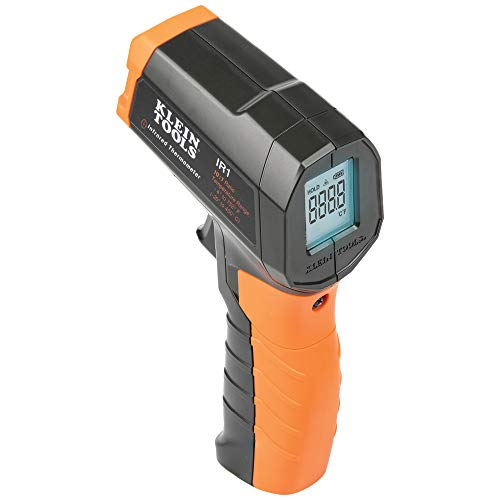 Best for reading after you've already pulled it away
Klein Tools IR1 Infrared Thermometer with Targeting Laser
The auto-hold display keeps the last reading on screen, which matters because you usually pull an infrared thermometer away from a hot motor can before you have time to read it.
$29.98
View on Amazon Best pinion set for gearing down a hot motor
48P 19T 20T 21T 22T 23T Pinion Gear with Screw Driver
Covers 19T through 23T in 48 pitch, sized for a 3.175mm brushless motor shaft. Dropping a tooth or two on the pinion is one of the fastest ways to cut motor RPM and current without swapping the whole drivetrain.
$12.99
View on AmazonGet this list emailed to you
Every pick on this page with its current price in one email, so you can decide later. One email, no sequence.
Frequently asked questions
What temperature is too hot for an RC motor?
As a rule of thumb, a brushless motor running consistently above about 160 to 170 degrees Fahrenheit at the can is worth investigating, and anything sustained above roughly 200 degrees is a caution zone where magnet strength and bearing grease can start to break down. Brushed motors are a bit more tolerant, with a commonly cited ceiling closer to 180 degrees before the same concerns apply.
Is the 5 second finger test accurate?
It is a useful quick check, not a precise measurement. If you can comfortably hold a finger on the motor can for a full 5 seconds right after a run, the motor is probably at or below roughly 150 degrees Fahrenheit. It depends on how fast you touch it after stopping and how sensitive your fingers are, so an infrared thermometer gives a far more consistent number run over run.
Why does my RC motor smell hot?
A faint hot electronics smell after a hard run is common and usually not a problem on its own. A strong burnt smell, especially one that lingers, usually means the windings or brush contacts are running hotter than they should, often from gearing that is too aggressive, a binding drivetrain, or a sagging battery pushing extra current.
Can a hot motor damage my ESC too?
Yes. The motor and the ESC share the same current path, so whatever is forcing the motor to run hot, usually aggressive gearing or a weak battery, is also pushing extra current and heat through the ESC. A hot-running motor is a good reason to check your ESC's own temperature and cooling as well, not just the motor.
Does gearing down really lower motor temperature?
Yes, in most cases. Gearing down, meaning a smaller pinion or a larger spur, lowers the overall gear ratio, which reduces the RPM and the current the motor has to produce to move the car at a given throttle input. Less current draw generally means less heat, at the cost of some top speed.
RCCarCalc is researched guidance, not professional advice. Figures come from published manufacturer specifications, listings and verified owner reports, not hands-on testing. Speeds are theoretical or as listed; real results depend on gearing, battery, tires and terrain. See how we research.