How to Choose Your First RC Car
For a true first hobby-grade car, most beginners do well with something like the Redcat Racing Volcano EPX at $155.55: a 1/10 scale, 4WD, brushed monster truck that is durable, widely parts-supported, and ready to run out of the box.
Hobby grade means every part on the car is replaceable and upgradeable, while toy grade means the car is essentially disposable once something inside it breaks.

Redcat Racing Volcano EPX 1/10 Scale Electric RC Monster Truck
- 1/10
- 4WD
- Brushed
A 1/10 scale, 4WD, brushed monster truck at $155.55 with waterproof electronics and a 2.4GHz radio. Brushed simplicity keeps the electronics forgiving while you learn, and the 1/10 scale means parts are easy to find.
$155.55 listed price, changes often
Check price on Amazon Full specsToy grade or hobby grade: what's the real difference?
A toy-grade RC car is a sealed, preassembled unit built to a price. The electronics, gearbox and body are usually one non-serviceable piece, so when a gear strips or an axle snaps, the car is generally done. A hobby-grade car uses off-the-shelf standard parts (bearings, gears, shocks, electronics) that can be replaced individually, which is why the same chassis can still be running years after purchase.
Neither is objectively wrong for a first car. A preassembled toy-grade truck like the Monster Jam Official Grave Digger RC at $34.99, a 1:24 scale truck built for ages 4 and up, is an honest first choice for a young child who mostly wants remote control fun for under $50. Hobby grade becomes worth the extra cost once someone wants a car that gets repaired and upgraded instead of thrown out.
- Toy grade: sealed electronics, fixed gearing, usually under $60, little to no aftermarket parts
- Hobby grade: replaceable bearings/gears/shocks, gearing you can change, wider price range, an aftermarket of spare and upgrade parts
What scale should your first RC car be?
Scale describes how big the car is relative to a full-size vehicle: a 1/10 scale truck is roughly a tenth the size of the real thing. Bigger scales generally mean bigger tires, more ground clearance, and a bigger, more forgiving footprint for a first-time driver. Smaller scales cost less, fit in tighter spaces, and are easier to store, but the spare parts market thins out fast below 1/16 scale.
Use the rc scale converter to see real dimensions side by side before you buy, and compare the tradeoffs directly in 1/10 vs 1/8 scale if you are torn between the two most common hobby-grade sizes.
| Scale | Typical footprint | Good first car? |
|---|---|---|
| 1/24 - 1/18 | Fits on a coffee table | Great for young kids or tight indoor space, thin aftermarket |
| 1/16 - 1/14 | Small backpack size | Good budget hobby-grade entry point |
| 1/10 | Shoebox to briefcase size | The most common first hobby-grade scale, widest parts support |
| 1/8 | Noticeably bigger and heavier | Fine for an adult first car, costs more to feed and repair |
Brushed or brushless for your first car?
A brushed motor is mechanically simple: it uses physical brushes and a commutator, has no separate speed controller logic to worry about, and is cheap to replace when it eventually wears out. A brushless motor uses electronic switching instead of brushes, which means more power and efficiency per size, but the electronic speed control (ESC) is more particular about things like a fully sagged LiPo pack cutting off mid-run.
For an absolute first car, brushed is the more forgiving starting point. Once you are comfortable charging and managing LiPo packs, stepping up to a brushless RTR like the ARRMA 1/10 Granite 4X4 223S BLX Brushless Monster Truck at $339.11 gives a real jump in power without changing anything else about how you drive. Compare the two systems in more depth at brushed vs brushless RC motors.
RTR or kit, and does the battery come included?
RTR means Ready-to-Run: the car arrives assembled with electronics installed, and in many cases just needs a battery and a set of transmitter batteries to drive. A kit, by contrast, arrives as an unbuilt chassis you assemble yourself, which is a project for someone who already wants to learn the mechanicals, not usually a first purchase.
Read the listing closely, because many current hobby-grade RTRs, including several ARRMA and Team Associated models, are sold as battery and charger not included. If the truck you want does not bundle one, budget for a completer pack separately, such as the Traxxas Battery/Charger Completer Flat Pack at $70.25 or the Traxxas 2985-3S Completer Pack at $99.95, which pairs a 3S LiPo with its matching charger.
Why does parts support matter for a first car?
Everyone crashes eventually. What decides whether that crash costs you five dollars and ten minutes or ends the hobby is whether replacement parts actually exist for your specific truck. Established brands like Traxxas, ARRMA, Losi, Team Associated and Axial have a real secondary aftermarket: generic screw kits, bearing kits and gear sets in this catalog are literally sold labeled as compatible with those chassis, which is a good sign of how deep that support runs.
Lesser-known import brands can be perfectly fun to drive, but if a specific bulkhead or gear breaks, you may only be able to source it from the original seller, on their timeline. If you expect to keep and repair your first car rather than replace it outright, weigh that against the sticker price.
What should you expect to break or wear out first?
The most common early failure on a first hobby-grade car is a stripped spur gear from a pinion that was meshed too tight or too loose out of the box. Bent front bulkheads, steering links and turnbuckles from curb or rock impacts come next, especially before a new driver has learned to lift off the throttle before a hit. Bearings wear out from dirt and water intrusion faster than most people expect, and a LiPo pack run down past its safe cutoff voltage loses capacity permanently, run after run.
None of that is a reason to avoid hobby grade. It is a reason to keep a small stock of spare screws, an extra pinion gear or two, and a hex driver set on hand from day one, instead of discovering you need them mid-run.
Gear for this job
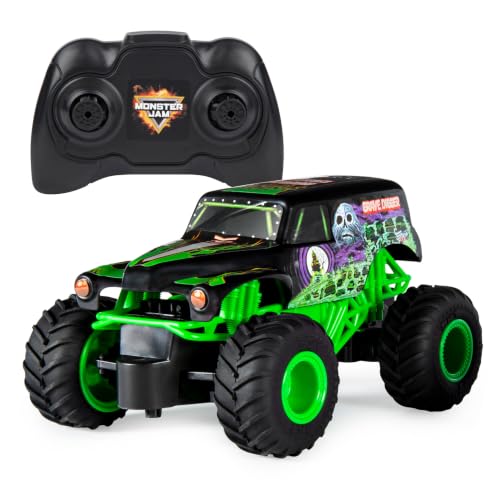 Best toy-grade pick for young kids
Monster Jam Official Grave Digger Remote Control Monster Truck
At $34.99, this 1:24 scale Monster Jam licensed truck is built for ages 4 and up. It will not survive a full teardown, but it does not need to: it is an honest, low-cost way to start a young kid on remote control before hobby grade makes sense.
$34.99 specs
View on Amazon Best if you want brushless from day one
ARRMA 1/10 Granite 4X4 223S BLX BRUSHLESS RC Monster Truck RTR
A 1/10 scale, 4WD brushless monster truck at $339.11. Costs more up front and its ESC is less forgiving of a sagged battery than a brushed setup, so it suits a beginner who is already comfortable managing LiPo packs.
$339.11 specs
View on Amazon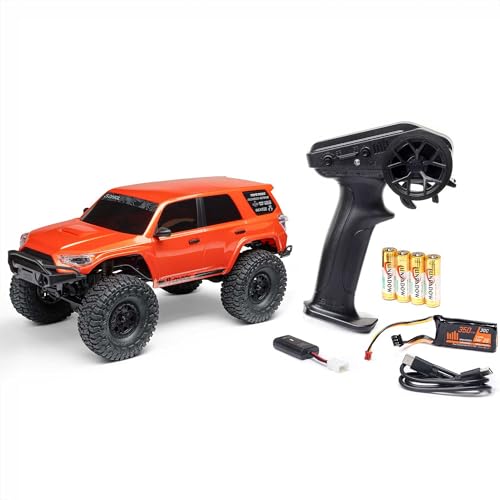 Best mini crawler starter
Axial RC Truck 1/24 SCX24 Toyota 4Runner 4X4 RTR Brushed Rock
A 1/24 scale, 4WD, brushed rock crawler at $159.99. Slow and forgiving by design, it is a good first hobby-grade car for someone who wants a serviceable truck without the speed and repair bills of a full-size basher.
$159.99 specs
View on AmazonGet this list emailed to you
Every pick on this page with its current price in one email, so you can decide later. One email, no sequence.
Frequently asked questions
Is a toy-grade RC car a bad first car?
No. A true toy-grade car, like a preassembled licensed monster truck, is a perfectly fine first car for a young child who mainly wants remote control fun for under $50. The tradeoff is that toy-grade cars are usually sealed and non-serviceable, so once a gear strips or a wheel snaps off, the car is typically done for good. Hobby grade becomes worth it once someone wants a car that can be repaired and upgraded instead of replaced.
What scale is best for a first RC car?
1/10 scale is the most common first scale because parts, tires and upgrades are the easiest to find across multiple brands. 1/16 and 1/18 scale cars cost less and fit tighter indoor spaces or younger drivers, but the aftermarket for them is thinner. Use the rc scale converter to compare real-world sizes before you decide.
Do I need a brushless motor for my first RC car?
No. A brushed motor is easier to live with as a first car: simpler electronics, no ESC voltage cutoff behavior to learn, and cheaper parts when something needs replacing. Brushless adds real power and efficiency but is more sensitive to a fully discharged LiPo pack. Most beginners are better served starting brushed and moving to brushless once they are comfortable with LiPo charging and voltage limits.
Why doesn't my RC car come with a battery and charger?
Many hobby-grade RTR trucks and buggies, especially current ARRMA and Team Associated models, are sold as battery and charger not included, so buyers can pick their own LiPo pack and charger instead of paying for one they may not want. If you do not already own a compatible charger, look for a listing that explicitly includes one, or budget separately for a completer pack.
How much should I expect to spend on a first RC car and starter parts?
Toy grade runs under $50. A first true hobby-grade brushed RTR typically lands between about $85 and $160. Stepping up to brushless from day one is usually $250 to $350 once you add a battery and charger if they are not included. On top of the car, budget another $30 to $40 for a spare pinion, a bearing kit, a screw kit and a basic hex driver set.
RCCarCalc is researched guidance, not professional advice. Figures come from published manufacturer specifications, listings and verified owner reports, not hands-on testing. Speeds are theoretical or as listed; real results depend on gearing, battery, tires and terrain. See how we research.